- Home »
- Catalog »
- Tanks, Inc. Fuel Tanks & EFI Systems »
- Sending Units
Squid's Rod Shop - Sending Units
Authorized Tanks, Inc. Dealer
Ensure accurate fuel level readings in your classic car, muscle car, hot rod, or custom truck with quality fuel tank sending units and gauge interface components. Whether you're replacing a faulty original sender, installing a new fuel tank, or upgrading to aftermarket instrumentation, selecting the correct fuel level sending unit is essential for reliable gauge operation.
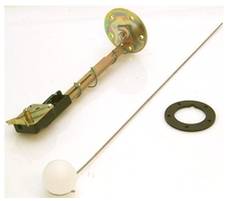
Squid's Rod Shop offers Tanks, Inc. fuel level sending units for a variety of original and aftermarket gauge systems. Our current catalog includes adjustable five-bolt sending units for early and later General Motors applications, Ford and Mopar vehicles, Stewart-Warner gauges, and VDO instrumentation. We also offer the Classic Instruments Fuel Link interface module for correcting compatibility issues between fuel gauges and sending units.
Fuel Level Sending Unit Applications
GM Through 1964 - 0-30 Ohms (Part #TAN-GME): Designed for many early General Motors fuel gauges that operate on a 0-ohm empty and 30-ohm full resistance range. This sender is commonly used in classic Chevrolet, GMC, Buick, Pontiac, and Oldsmobile applications with compatible instrumentation.
GM 1965 and Later - 0-90 Ohms (Part #TAN-GML): Designed for compatible General Motors fuel gauges that operate on a 0-ohm empty and 90-ohm full resistance range. This configuration is commonly used on later classic Chevrolet, GMC, Pontiac, Buick, and Oldsmobile vehicles. Some newer GM vehicles use different resistance ranges.
Early Ford & Mopar - 73-10 Ohms (Part #TAN-ORG): Designed for many early Ford and Chrysler-family fuel gauges using approximately 73-75 ohms empty and 10 ohms full. This sender provides compatibility with appropriately matched factory-style instrumentation.
Stewart-Warner & Aftermarket Gauges - 240-33 Ohms (Part #TAN-SW): Designed for fuel gauges operating on the common aftermarket 240-ohm empty and 33-ohm full resistance range. This configuration is frequently used with Stewart-Warner, AutoMeter, and other compatible aftermarket gauge systems.
VDO Gauges - 10-180 Ohms (Part #TAN-VDO): Designed for compatible VDO fuel gauges operating on a 10-ohm empty and 180-ohm full resistance range.
Tanks, Inc. Five-Bolt Sending Unit Features
Tanks, Inc. adjustable fuel-level sending units are designed for use with compatible fuel tanks featuring the standard SAE five-bolt sending unit mounting pattern.
Key features include:
- Standard SAE five-bolt mounting flange.
- Adjustable float-arm design for fuel tanks approximately 6 to 24 inches deep.
- High-quality ceramic-board resistance element.
- Available resistance ranges for factory and aftermarket gauge systems.
- Compatible with applicable 6-24 volt vehicle electrical systems, including positive- and negative-ground configurations.
- Suitable for properly configured original-style and aftermarket replacement fuel tanks.
These sending units measure fuel level only and do not incorporate a fuel pickup tube. Applications requiring a fuel pickup through the sending unit must use an appropriately designed combination sender and pickup assembly.
Fuel Link Gauge Interface Module
The Classic Instruments Fuel Link interface module (Part #SN34) provides a solution when the fuel-level sending unit and fuel gauge operate on different electrical resistance ranges.
For example, a vehicle equipped with an original 0-30 ohm fuel sender may receive aftermarket instrumentation designed for a 240-33 ohm sender. Rather than replacing an otherwise functional sending unit, the Fuel Link module can be configured to translate the sender signal into a compatible output for the gauge.
Features include configurable resistance calibration, multiple preset sender ranges, electronic adjustment, and optional low-fuel warning light control. The module is designed for compatible short-sweep analog fuel gauges and is not compatible with all modern electronically controlled instruments. Gauge compatibility should be confirmed before installation.
Fuel Gauge Compatibility & Calibration
Fuel-level sending units operate by changing electrical resistance as the fuel level changes. Different manufacturers use different resistance ranges, and some systems increase resistance as the tank fills while others decrease resistance.
Installing a sending unit with the wrong resistance range can cause inaccurate fuel level readings, reversed gauge operation, or a gauge that does not register correctly.
Before selecting a sending unit, confirm the gauge manufacturer's required resistance range, fuel tank depth, sender mounting pattern, float-arm clearance, and available installation space. After installation, the sender should be adjusted and tested throughout its operating travel to verify proper gauge operation.
For custom fuel tanks or modified fuel systems, additional calibration may be necessary to account for irregular tank shapes and fuel level changes.
Professional Fuel System & Gauge Installation
As an authorized Tanks, Inc. dealer, Squid's Rod Shop provides fuel system components, custom fabrication, and professional installation at our Hickory, North Carolina facility. Our team specializes in fuel tank installation, sending unit replacement, custom electrical wiring, gauge calibration, and integration with original and modern instrumentation.
Whether you're restoring an original classic, installing Dakota Digital gauges, upgrading a custom truck, or building a modern restomod with an LS, LT, or Ford Coyote engine conversion, we can help select and integrate the appropriate fuel-level sensing and instrumentation components.
Browse our fuel-level sending units and gauge interface components or contact Squid's Rod Shop for assistance with compatibility, product selection, and professional installation services.
Pricing Note: All prices are subject to manufacturer's price changes without notice. If a price change occurs, we will notify you for your approval before finalizing your order.
Browse Sending Units Products


